Sorry, Your Robot Has Hit Its Token Limit
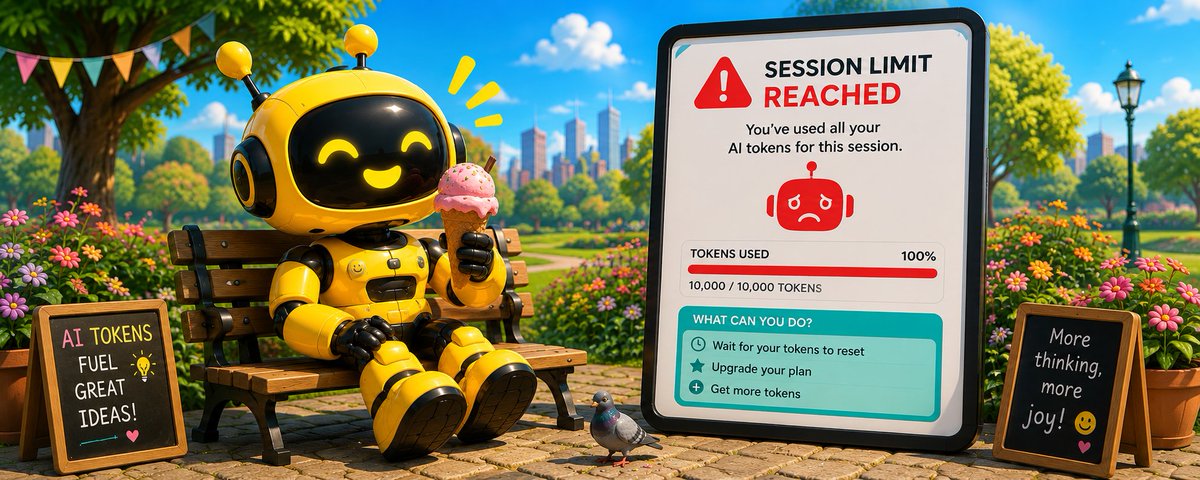
Anyone who spends serious time with AI — vibe coders, power users, people deep in a project — knows the feeling. You’re in the zone. Building something. Making progress. And then, suddenly, nothing. The model stops. A cold message appears: “You’ve hit your session limit” or “You’ve reached your weekly token limit.”
What do you do? You wait. Sometimes for hours, sometimes for days if you’ve burned through the weekly quota. Or you upgrade to a more expensive plan, the digital equivalent of switching to a bigger phone subscription. We’ve all gotten so used to this rhythm that we start planning our days around it. “I’ll push hard until the tokens run out, then I’ll shower, get groceries, hit the gym, or mow the lawn. After that, back to burning tokens on the next idea.”
It’s mildly annoying when it happens to a language model. It’s potentially disastrous if the same model is applied to robots.
Several companies are already building AI-powered humanoid robots — machines with arms, legs, and the ability to move through the physical world. Tesla has started producing the first batches of Optimus. Others are not far behind. These robots are meant to help around the house, in warehouses, in care settings. They will load dishwashers, carry groceries, tidy rooms, and assist people.
Now imagine the same token limits applied to them.
A half-loaded dishwasher standing open because the robot ran out of tokens halfway through. Groceries abandoned somewhere between the supermarket and your front door. An Optimus frozen mid-step in the hallway, displaying a polite but useless message: “Session limit reached. Please wait or upgrade your plan.”
Suddenly the inconvenience we accept from chatbots becomes completely unacceptable. A language model can wait. A physical robot stuck in your kitchen cannot.
Hopefully the industry finds a different economic model for embodied AI. Maybe sufficiently capable models will eventually run fully locally, with no ongoing token costs. Maybe robot owners will get an “all-you-can-use” subscription for a fixed period. Or perhaps the pricing will be based on useful work completed rather than raw tokens consumed.
We still have a few years before these machines become common in everyday life. That window is useful. Because if the current “pay-per-token” logic migrates unchanged from chat windows into the physical world, we’re going to have some very expensive, very frozen robots standing around our houses.